Choosing floss and colors
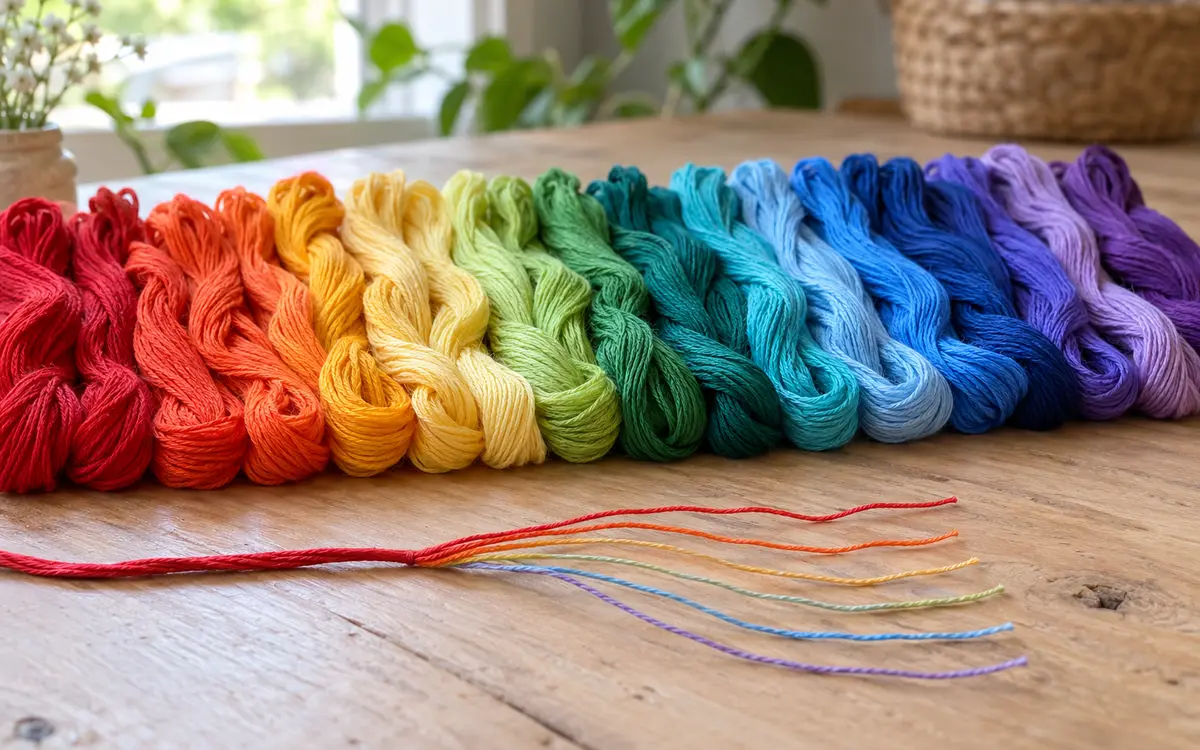
Floss brings your piece to life. A few basics about strand count, color numbers and choosing colors make your cross stitch look the way you picture it – neither flat nor bulky.
Six-strand floss: six strands you separate
The usual cross stitch thread is six-strand embroidery floss: six loosely twisted strands of mercerized cotton. A skein is typically 8.7 yards (8 m) long. You almost never stitch with all six; you pull out the number you need:
- 11-count Aida: 3 strands
- 14-count Aida and 28-count linen over 2: 2 strands – the standard
- 18-count Aida and 32-count linen over 2: 1 to 2 strands
- Backstitch and outlines: usually 1 strand
Test on a scrap: stitches should fill the square well without clogging the hole. If the area looks gappy, add a strand.
Color numbers
Every color has a manufacturer number, such as “DMC 310” for black. Good charts list these numbers in the key so you buy exactly the right color. Each brand has its own numbering. Conversion charts exist, but the colors are never quite identical, so try to stay with one brand within a piece.
In the Stitchmio pattern maker you can add your floss number to every color – or let it suggest the closest DMC floss. The numbers appear in the key of your PDF, together with a shopping list with skeins per color. Screen colors always differ a little from real floss, so compare in the store when in doubt.
Picking colors
- Value before hue: a design works mainly through light and dark contrast. Lay your skeins side by side and squint: whatever blurs together will blur in the finished piece too.
- Shade in steps: shadows and curves need three to five steps of the same color, light to dark. Jumping straight from light to dark looks harsh.
- Think about the fabric: very light colors disappear on white fabric. Hold the skeins against the fabric you'll use.
- Compare in daylight: artificial light distorts blues, greens and grays in particular.
- Less is often more: two very similar colors are hard to tell apart on fabric. Merge them into one – fewer thread changes.
Blending and effects
You can thread two strands of different colors into one needle (“tweeding” or blending). That creates in-between shades or a heathered look, for fur or water, say. Metallic and satin threads add highlights but are slippery: use shorter lengths and stitch slowly.
Stay organized
Wind each color onto a floss bobbin and write the number and the chart symbol on it. With many colors, a thread organizer made of punched card helps: cut lengths in advance and knot them next to the matching symbol. To work out how many skeins to buy of each color, see How much floss do I need?
Frequently asked questions
Can I mix DMC and Anchor floss?
Yes. Both are six-strand cotton floss of a similar weight. Their color numbers differ, though – use the manufacturer’s conversion chart and, when in doubt, compare the skeins side by side in daylight.
How many colors should a pattern have?
Simple designs need 3 to 8 colors. Photo designs look natural with 20 to 40. More colors mean more thread changes and more floss to buy.