Colorwork knitting from a chart
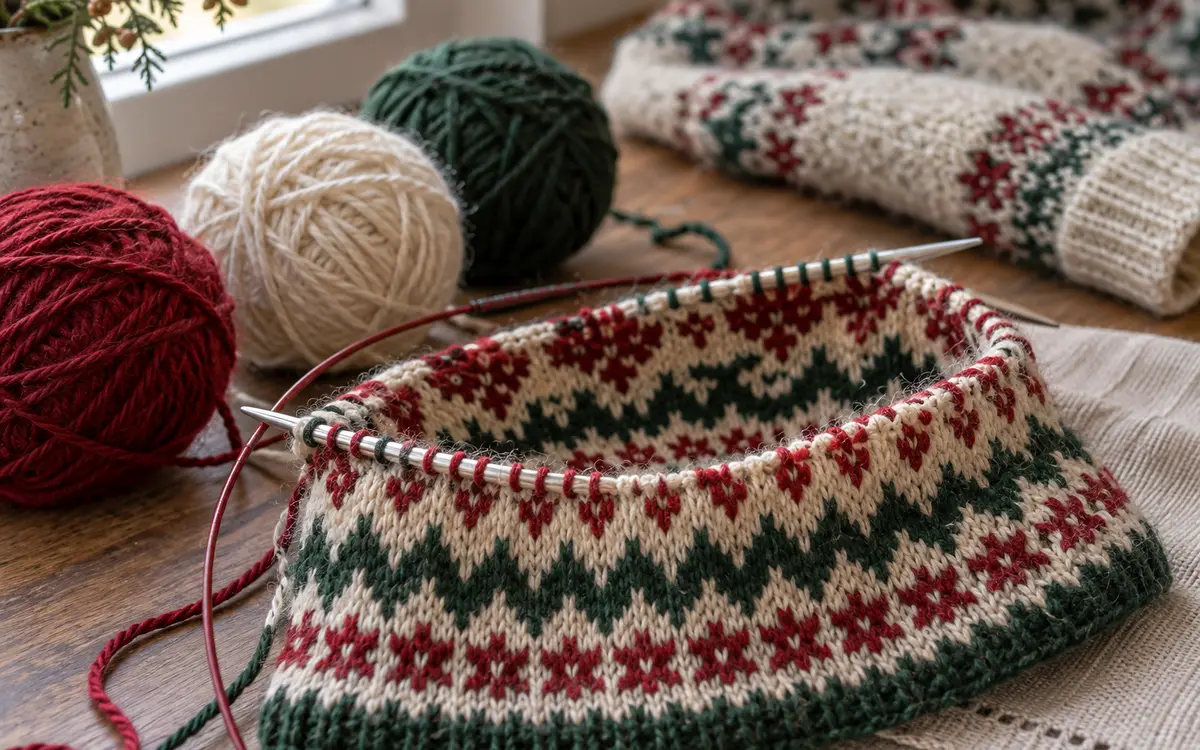
Stars, diamonds, snowflakes: Fair Isle and Nordic patterns look complicated, but they're just stockinette – with two colors in a row. The chart shows you, stitch by stitch, which color comes next.
Reading the chart
Each square is a stitch and each row of squares a row or round. You read from bottom to top and, on right-side rows, from right to left – the way stitches form on the needle. A box often marks the repeat, the part you repeat across the width. The basics are in How to read a knitting chart.
In the round or flat?
Colorwork is easiest in the round, for hats, sweaters or socks. You always see the right side, read every round from right to left and always have the pattern in front of you. Flat works too: you purl the wrong-side rows and read the chart from left to right.
Floats: relaxed, but not too loose
The color you're not using travels along the back. These floats decide whether your fabric lies flat:
- Spread the stitches on the right needle before switching colors. The float then lies long enough and the fabric doesn't pucker.
- Catch floats longer than 5 stitches in the middle: twist the working yarn once around the other color, then carry on.
- Check the back now and then: floats should lie flat, without loops.
Color dominance
When you hold both yarns, one always sits below the other. The yarn coming from below makes slightly larger stitches and stands out more. So always hold the pattern color in the same position and don't switch midway – it would show.
Swatch in pattern
Stranded fabric is firmer than single-color knitting. Knit your gauge swatch in pattern, ideally in the round, and wash and block it before you measure. Because a knit stitch is wider than it is tall, a design drawn on square grid paper comes out a little squat when knitted. Plan for that when you design your own.
Design your own
In the knitting mode of the Stitchmio pattern maker you enter your gauge. The squares then take on the real stitch proportions, so you see while drawing how the design will look knitted. The chart is numbered from the bottom right as usual. Mind the floats in your own designs: break up long single-color stretches with small dots.
Frequently asked questions
How long can floats be?
As a rule of thumb no more than 5 stitches, or about 1 inch. Longer floats snag easily when you put the garment on. Catch them in the middle by twisting the working yarn once around the other color.
Why is my colorwork tighter than my gauge swatch?
Floats pull the fabric in when they are too short. Knit your gauge swatch in pattern and go up half a needle size if needed.