How to read a cross stitch chart
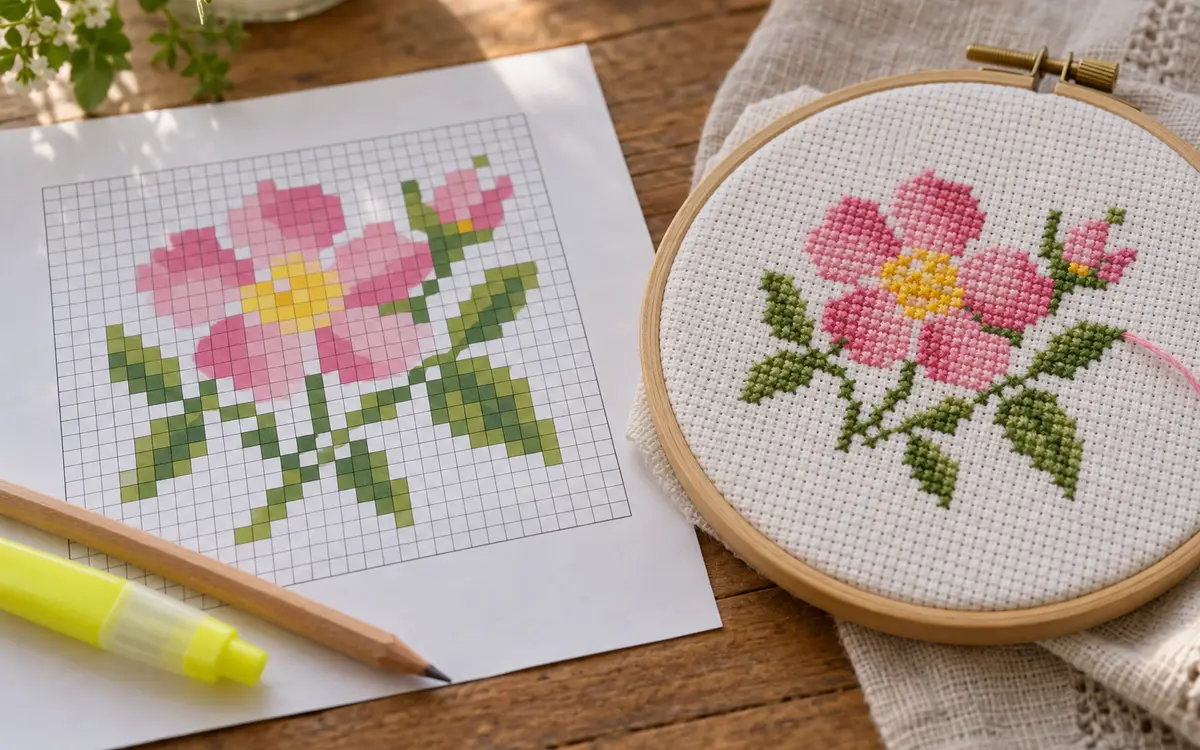
At first glance a cross stitch chart looks like a colorful crossword. Once you know three basic rules, you can read any pattern in minutes.
1. Every square is one cross stitch
The grid represents your fabric. One square on the chart equals one cross stitch – on Aida that is one fabric square, on linen usually 2 × 2 threads. Empty squares stay unstitched.
2. Symbols and the color key
So colors stay distinguishable even in black and white, each color gets a symbol – like ●, ○, ▲ or ×. The color key (legend) tells you which symbol belongs to which thread. Good keys also list the thread number (DMC, Anchor…) and how many stitches you make in each color, which helps you estimate how much floss you need.
3. Grid lines and numbers
Every 10 squares the grid line is bolder. Numbers along the edges count columns and rows, so you can always find your place – even when a pattern spans several pages. Multi-page charts often repeat one to three rows at the edge (overlap) to help you line things up.
4. Find the center
Small arrows or triangles on the edges mark the center. Start there: fold the fabric once lengthwise and once crosswise; the crease is the center. Your design ends up nicely centered with enough margin for framing.
5. Count carefully
- Count in small blocks – the 10-stitch lines help.
- Finish one color in an area before switching.
- Highlight stitched areas on a copy – or tick off rows in Stitchmio on your tablet (“Track rows”).
- Make all top stitches cross in the same direction for an even look.
Make your own chart
Once you can read charts, the next step is your own design. With the Stitchmio pattern maker you draw right on the grid; symbols, key, stitch counts and grid lines are added automatically. Our guide Design your own cross stitch pattern walks you through it.
FAQ
Where do I start a cross stitch pattern?
Usually in the center. Fold your fabric in half twice to find the middle, and look for the arrows on the edges of the chart – where their lines cross is the center of the design.
What do the bold lines mean?
They divide the grid into blocks of 10 × 10 stitches so you miscount less often.