Temperature blanket: a year of weather in rows
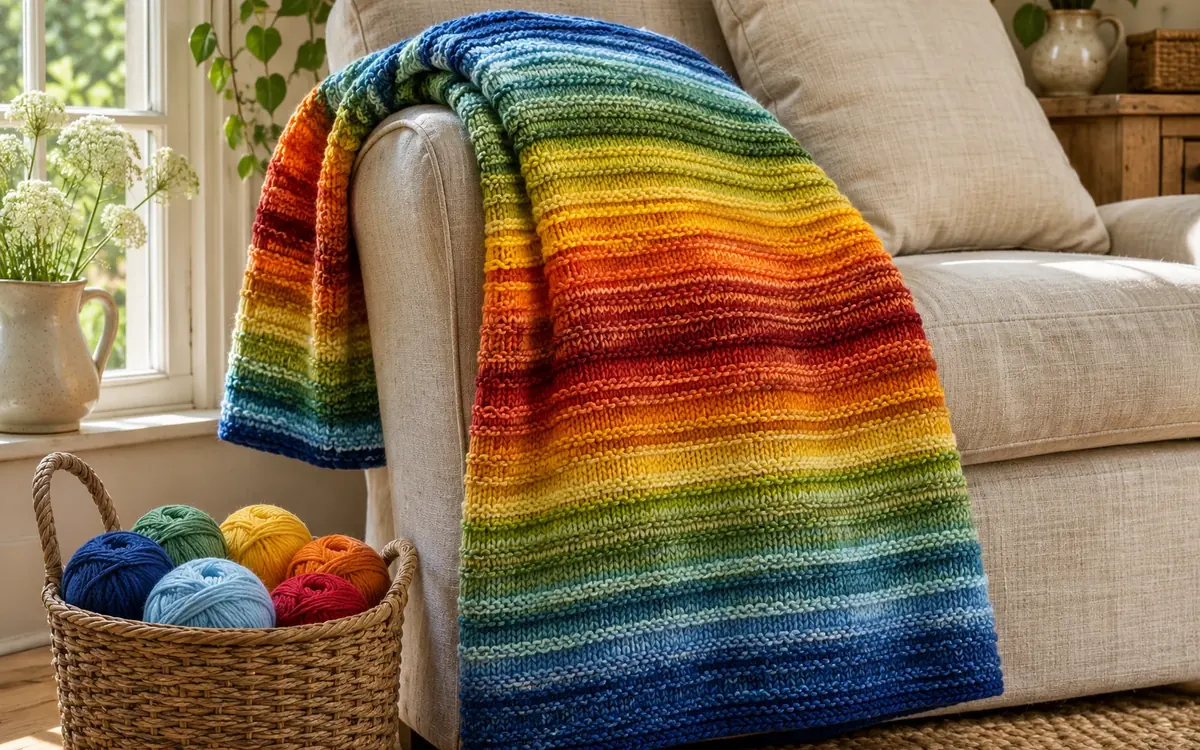
For a temperature blanket you knit or crochet one row each day in the color that matches the day’s temperature. By the end of the year you can see winter, spring, heat waves and cold snaps as stripes. A lovely year-long project – easiest when you start on January 1.
Step 1: set your rules
- Which temperature: the daily high or the daily average – and the same one all year.
- Which place: your hometown, or a place that means something to you.
- How much per day: one row per day is common. Two rows make bolder stripes but a blanket twice as long; in garter stitch (knit every row) they form exactly one ridge.
- Technique: stockinette (knit the right-side rows, purl the wrong-side rows), garter stitch or single crochet (the shortest basic crochet stitch) – all work. If you prefer squares, make one granny square per day, a crocheted square worked out from the center.
Step 2: choose a color scale
Nine colors in 10-degree steps cover most US weather: from midnight blue for freezing days to wine red for scorchers. The scale is available as a free pattern. When you open it in the editor, all nine colors with their temperature ranges are already in the color list.
| Color | Daily high |
|---|---|
| Midnight blue | below 25 °F |
| Blue | 25 to under 35 °F |
| Light blue | 35 to under 45 °F |
| Mint | 45 to under 55 °F |
| Green | 55 to under 65 °F |
| Yellow | 65 to under 75 °F |
| Orange | 75 to under 85 °F |
| Red | 85 to under 95 °F |
| Wine red | 95 °F and above |
If your town runs warmer or colder, shift the ranges. A look at last year’s temperatures shows whether every color gets a few days – otherwise you’ll have skeins left over.
Step 3: work out size and yarn
The stitch count sets the width, the days set the length. An example at 22 stitches and 30 rows per 4 inches:
- 40 inches wide: 40 ÷ 4 × 22 = 220 stitches to cast on.
- 365 rows, one per day: 365 ÷ 30 × 4 = about 49 inches long.
The knitting gauge calculator does this with your own gauge. How to knit and measure a swatch: How to knit a gauge swatch.
For yarn, weigh after the first week: the weight of the seven rows ÷ 7 is the weight of one row. Times 365, plus about 10 percent extra, is your total. To split it by color, use last year’s temperatures: count how many days fell into each range.
Step 4: find the weather data
The easiest way is to note the daily high from your weather app in a calendar every evening. To check later or to knit a past year, the National Weather Service publishes daily highs and lows for many US stations in its NOWData tool.
Variation: a year in cross stitches
For a small wall piece, stitch one cross stitch per day: twelve columns for the months, 31 squares for the days. Open the color chart in the editor, set the type to “Cross stitch / embroidery” under “Settings” (the color chart is a knitting chart), set 12 × 31 squares with “Resize” and fill in one square per day in its color; erase the days that don’t exist. The grid fits the free print and comes out about 1.1 × 2.8 inches on 11-count Aida.
Frequently asked questions
Daily high or daily average?
Either works – just stick with one for the whole year. The daily high is easier to find and shows the seasons more clearly.
What if I miss a few days?
Write the temperatures down in a calendar or a note and catch up later. Many knitters work a week at a time anyway.
Can I change the temperature ranges?
Yes. The scale is a suggestion for a typical US climate. If your town runs warmer or colder, shift the ranges so every color shows up during the year.
Which yarn works well?
A yarn that comes in many colors and washes well, such as superwash merino or a wool blend. Buy all colors at once if you can, as dye lots can differ slightly.